
Biography
Who they were in the family's own words — character, work, migration, the things a headstone cannot hold.
For Muslim families
Digital memorials for Muslim families: preserving the stories, memories and legacies of those we love. A digital memorial keeps the biography, photographs, timeline, family tree and tributes together, with privacy options for your family. Where a grave carries little more than a name, the digital record offers space for the life behind it.
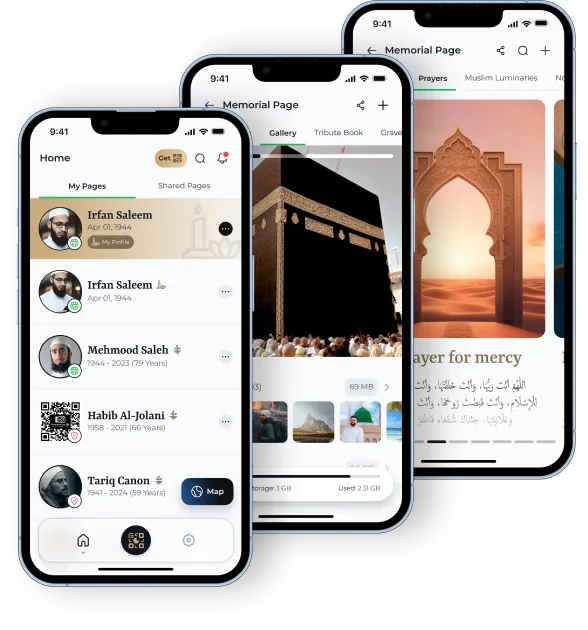
A Muslim digital memorial is an online memorial page for someone who has passed, kept by their family. With Moments by QR it holds a biography, timeline, photo gallery, family tree, tribute book and grave location, and it can be private and PIN-protected so it is seen only by the people the family chooses.
It is a record, not a monument. Nothing about it changes how a burial is carried out or what stands at the graveside. For the wider category, see digital memorials.
Digital remembrance for Muslims is the wider practice of preserving and revisiting stories, photographs and family connections. A Muslim digital memorial is one place to keep that record after a death, including resting-place details where relevant. Families may live in several countries or prefer a private record to public display. You can see one in full on the example memorial, and what to ask any provider in how to choose one.
This is not only about elders: loved ones of different ages have stories worth preserving. Moments by QR also provides Legacy Pages for living people. A Memorial Page is for someone who has died; a Legacy Page is for someone who is living.
We do not offer religious rulings on this page. Questions about what is appropriate at a graveside are for your own scholars and your burial ground — this page describes only what the product does.
Family memories can be held in conversations, photographs and scattered records. Where graves are kept plain and relatives live in different countries, gathering those memories gives the family a shared record to return to.
Every Memorial Page is built from the same six sections, so nothing important is left to chance and every family records the same kinds of things.
Who they were in the family's own words — character, work, migration, the things a headstone cannot hold.
Births, marriages, journeys and milestones placed in order, so grandchildren can follow the shape of a life.
Photographs kept together instead of scattered across phones, group chats and old albums.
Recorded relationships across generations — often the part that is lost first in large, dispersed families.
Messages and remembrances from family and community, held in one place rather than a feed.
Where they are buried, recorded so relatives — including those visiting from abroad — can find the grave.
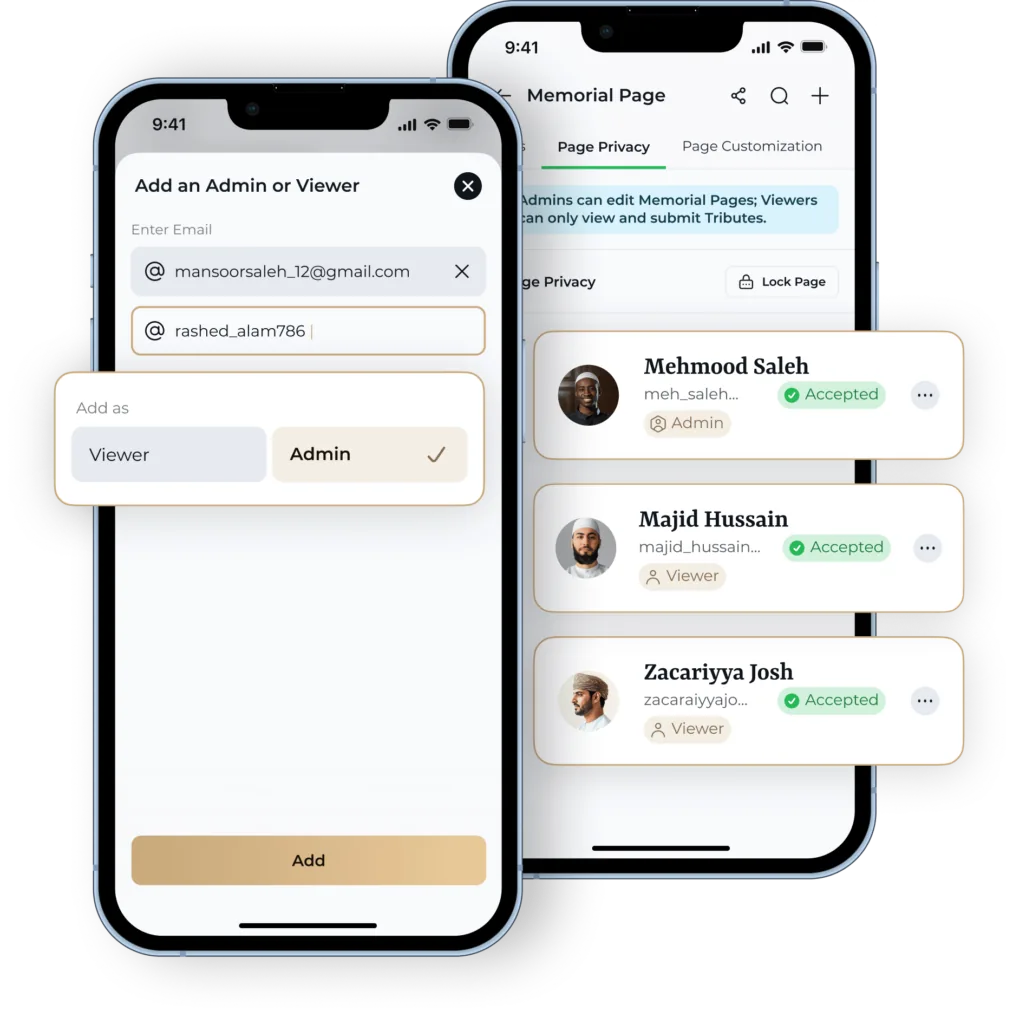
Yes. A memorial can be public, public with role and access controls, or private and PIN-protected. A private record is an option for families who do not want the contents shared publicly.
Moments by QR defines four family roles: Owner, Delegate, Contributor and Nominee. Before inviting relatives to add photographs or memories, confirm which role can add, edit, approve or remove each type of content. Role names alone do not explain those permissions.
Relatives abroad can use the online memorial rather than needing to visit the grave. Access still depends on the page's privacy mode. For the available modes and questions to ask, see privacy and family control.
Viewable by anyone with the link or the plaque.
Viewable, with contribution and management handled through family roles.
Opens only for people the family has given the PIN.
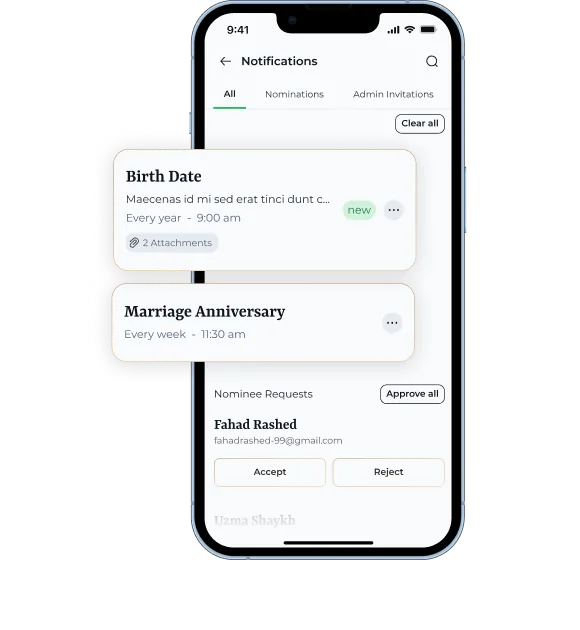
Two features do the quiet work: On This Day resurfaces moments from the memorial on their anniversary, and custom notifications let a family set their own reminders to remember someone.
Full walkthrough: how digital memorials work. Who can see those moments, and who decides, is set out in privacy and family control.
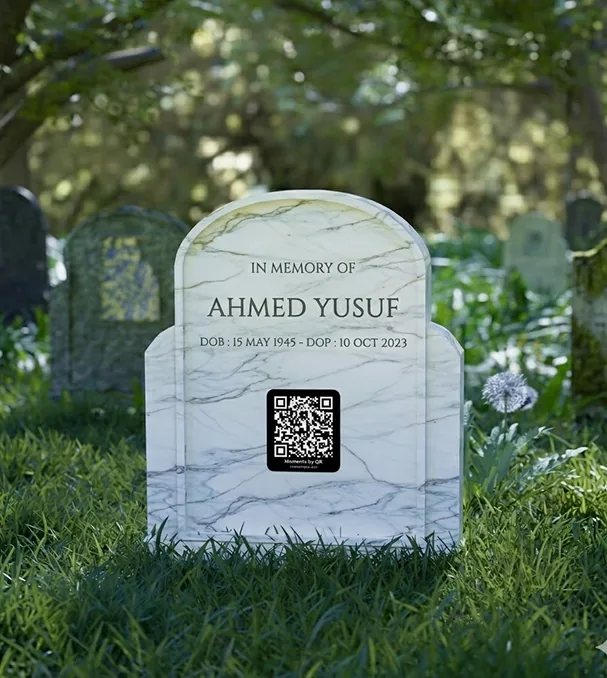
No. The memorial works entirely on its own. A QR plaque is optional — it simply gives visitors a way to reach the memorial from the resting place, and it should only be placed with the burial ground's permission.
Many Muslim burial grounds have strict rules about what may be placed at a grave. Ask them first, in writing. If a plaque is not permitted or not wanted, the memorial is unaffected — read more about QR memorials and grave permission.
Create a Memorial Page with the biography, timeline, gallery, family tree, tribute book and grave location — private or public, as your family decides.
Moments by QR states product facts about its own service from first-party product information, cites official primary sources for anything statutory or operational, and leaves questions it cannot evidence visibly unanswered rather than guessing.
The category page: sections, privacy modes and how families manage a memorial.
How a scannable plaque connects a resting place to the memorial behind it.
Preserving a person's record, the words people use, and messages for a bereaved family.