
Muslim remembrance
The hub: preserving a record, the words people use, and condolences.
Muslim remembrance
Families rarely lose a memory all at once. It goes gradually — the photographs stay on one phone, the stories stay with one aunt, and the details of the grave stay with whoever was there. This is a practical order to work in, and the omissions that cost the most later.
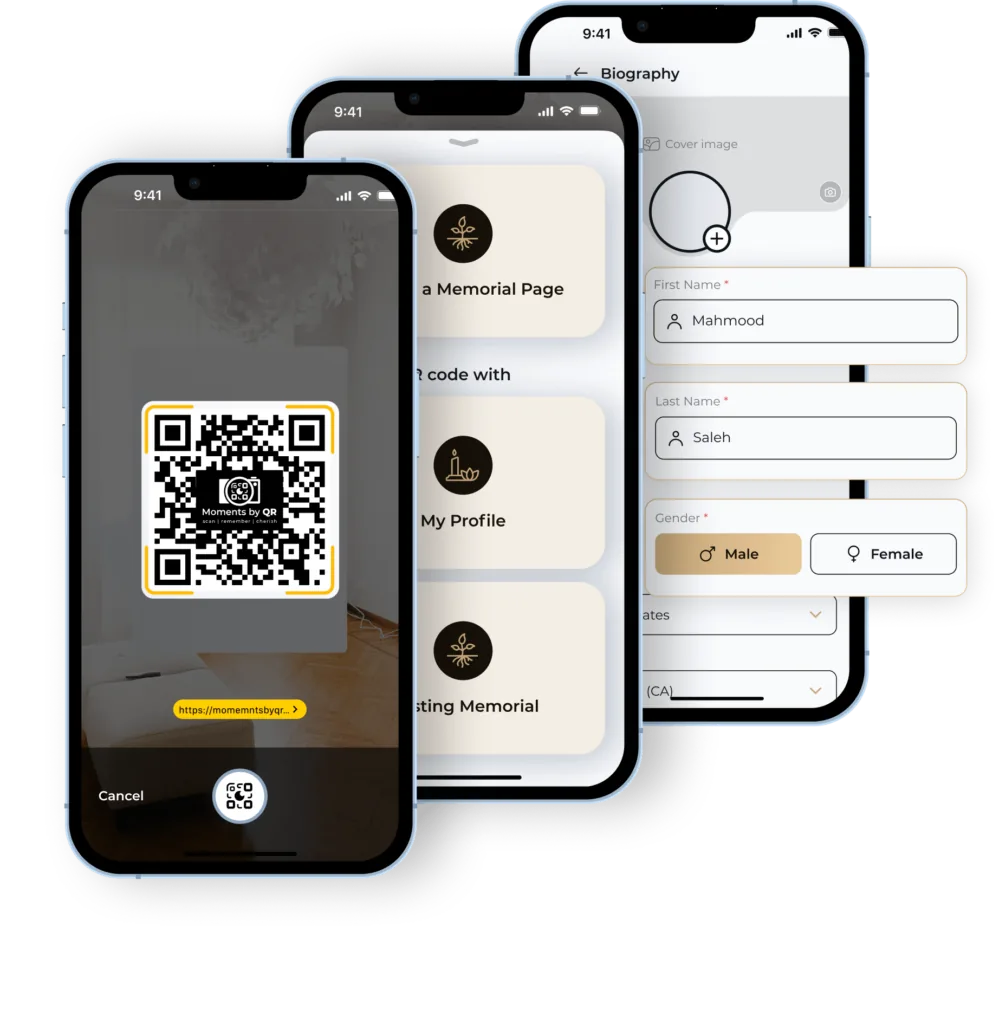
Gather the photographs into one place before they scatter, write a short outline of the life while the facts are still easy to check, record the eldest relatives speaking, ask people outside the immediate family for their own memory of the person, write down the grave details, and keep all of it somewhere more than one relative can open and add to.
The hardest part is not the technology. It is doing the first pass early enough, while people still remember who is in the photographs.
Ask each relative to send what they already have, to one place, within the first weeks. Photographs are usually spread across a dozen phones and two or three old albums, and the albums are the ones that get lost when a house is cleared.
Where they were born, when they moved, what work they did, who they married, the children in order. An outline takes twenty minutes and is what nobody can reconstruct in ten years' time.
Almost everything unrecoverable sits with the oldest generation: village names, family lines, the reason a decision was made. Record the conversation on a phone rather than trying to write while they speak.
Neighbours, colleagues, people from the mosque or the community will each hold one story the family has never heard. These are the accounts that fade fastest because nobody thinks to ask for them.
The burial ground, the section, and how to actually find the plot. This is normally held by one relative who attended the burial, and it is the single most practical thing to write down for family who live abroad.
A folder on one phone is not preservation. Whatever you use, more than one family member should be able to open it, add to it, and still reach it years later.
There is no fixed point, and no family should feel rushed in the first days. In practice the two useful moments are the period when relatives are still gathered — because that is when the older generation is in the room — and later, once the household has settled, when there is time to write things down properly.
If a death is recent and you are looking for the words to say or send rather than a method for records, start with what to say when someone dies or the condolence message examples.
What this page does not say: we make no claim about religious reward, benefit to the deceased, or whether any particular form of remembrance is encouraged or discouraged. Those are questions for your own scholar, not for a company that sells a product.
Wherever it is, three things matter: more than one person can open it, new material can be added later, and the family controls who else can see it. A shared album fails the third test; a single person's phone fails all three.
A Moments by QR Memorial Page is one way to do it — the sections are Biography, Timeline, Gallery, Family Tree, Tribute Book and Grave Location, more than one family member can be given a role, and the memorial can be public, role-controlled, or private and PIN-protected. You can see what a finished one looks like on the example memorial, and the category is explained in what a digital memorial is. If you want the mechanics before deciding anything, read how digital memorials work; if you want the Muslim-family context, read digital memorials for Muslim families. The longevity and ownership questions — which we do not all answer yet — are set out in permanence and data ownership.
If the outline, the photographs and the grave details are going to live somewhere, it should be somewhere more than one relative can open.
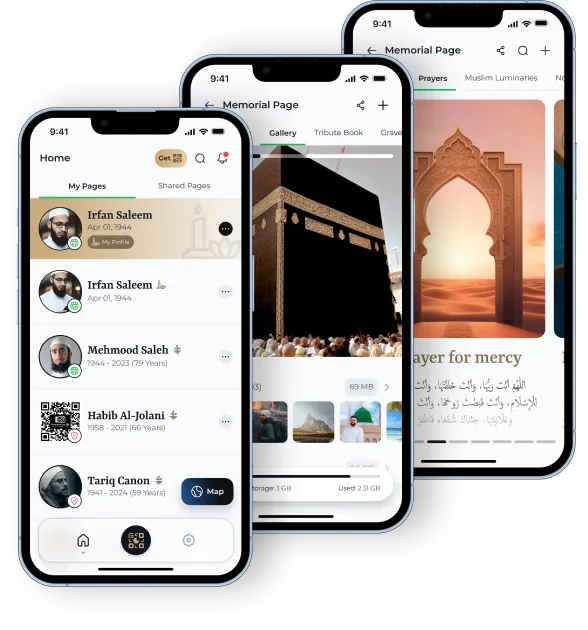
Moments by QR states product facts about its own service from first-party product information, cites official primary sources for anything statutory or operational, and leaves questions it cannot evidence visibly unanswered rather than guessing.
The hub: preserving a record, the words people use, and condolences.
Plain graves, dispersed families, and what a Memorial Page holds.
The category explained, with the product spec and the price.