
Plain graves carry little
Where a grave is unmarked or carries only a name, nothing at the graveside tells a grandchild who the person actually was.
Muslim remembrance
This section is about what happens to a person's memory once the burial is over: what families do to keep a record, what people say to each other in the first days, and how to write to someone who has just lost a parent. It is not a guide to janazah, and it issues no religious rulings.
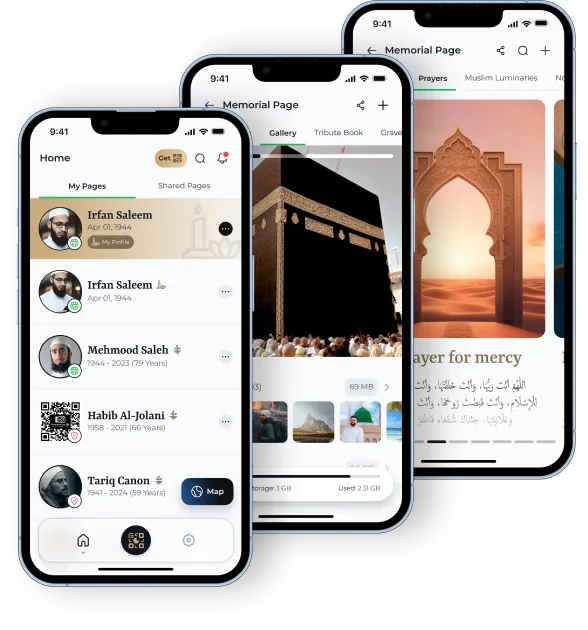
In practice it covers two separate things. One is what people say and do around the death itself — the words offered to the family, the visits, the private prayers. The other is what is kept afterwards: the stories, the photographs, the dates, the knowledge of where someone is buried. The first is well covered by families and their own scholars. The second usually has nobody responsible for it.
These pages deal mainly with the second — because that is where a record is quietly lost. Where the question is religious rather than practical, we say so and point you to your own scholar rather than answering it here.
Keeping that record is sometimes called digital remembrance for Muslims: a family's stories, photographs, family lines and grave details held together and reachable after someone dies. The place that record is kept is a Muslim digital memorial.
Digital remembrance is broader than remembrance after death: families can also preserve a living loved one's stories. Moments by QR provides Legacy Pages for living people as well as Memorial Pages for those who have died. This section focuses on the practical questions after a death, without limiting the wider platform to that stage of life.
The practical side: gathering photographs before they are scattered across phones, writing down what only the eldest relatives know, and recording the grave details — how families preserve memories after someone dies.
An explanation of the customary words and why they are used, written carefully and without issuing rulings — what to say when someone dies in Islam.
Wording you can adapt when you need to write something now — to a colleague, a cousin, or a friend who has lost a parent — Islamic condolence messages.
Where a grave is unmarked or carries only a name, nothing at the graveside tells a grandchild who the person actually was.
Names of villages, the order of siblings, the year someone arrived — these usually live with one or two elders and are rarely written down.
Relatives abroad may visit a grave once in years. What they can reach from a distance is a record, not a place.
If you are looking specifically at how a digital memorial works for a Muslim family — what it holds, who can see it, and how privacy is set — that is covered on its own page, and the general mechanics are in how digital memorials work.
Most of what a family wants to keep is not written anywhere. Start with the topic that matches your situation — the practical questions first, the product only if it is useful to you.
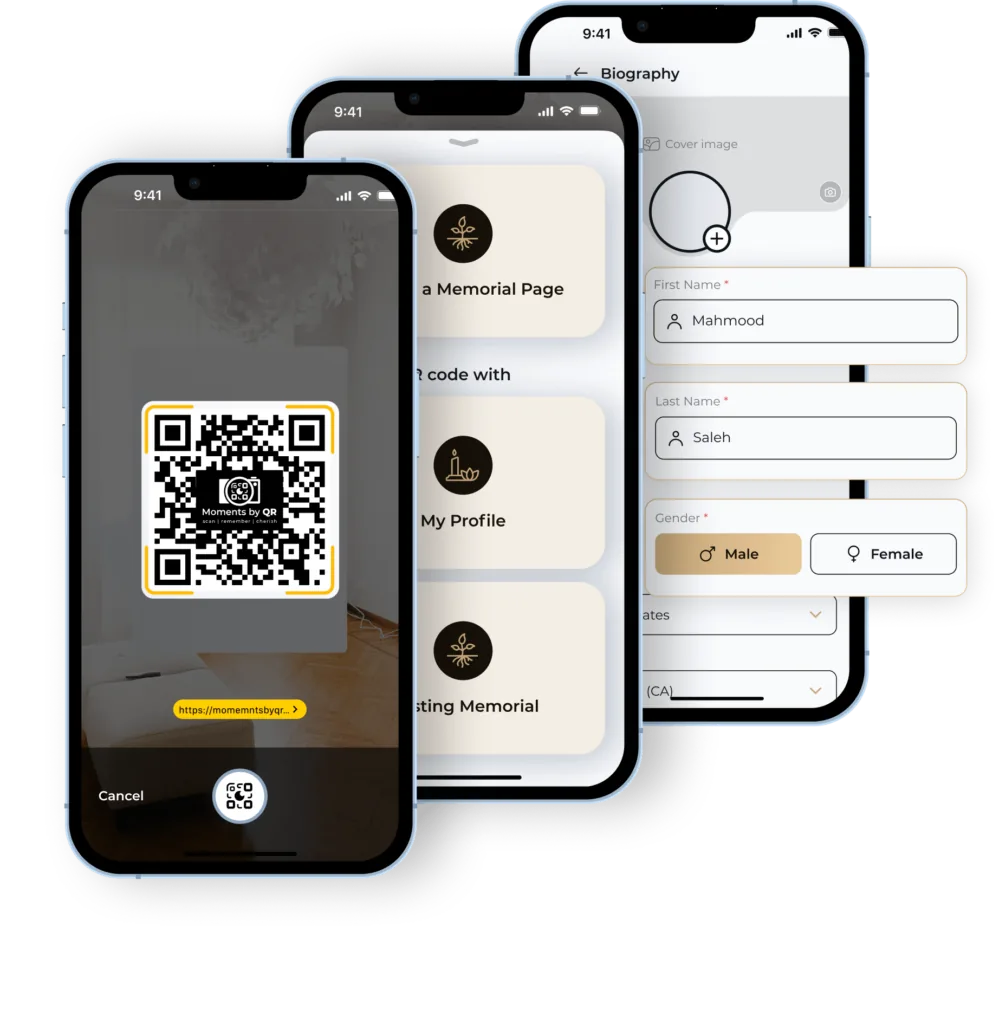
Moments by QR states product facts about its own service from first-party product information, cites official primary sources for anything statutory or operational, and leaves questions it cannot evidence visibly unanswered rather than guessing.
What to gather, who to ask, and the order families usually do it in.
What a Memorial Page holds, and how privacy is set.
Who can see a memorial, who manages it, and what we do not claim.